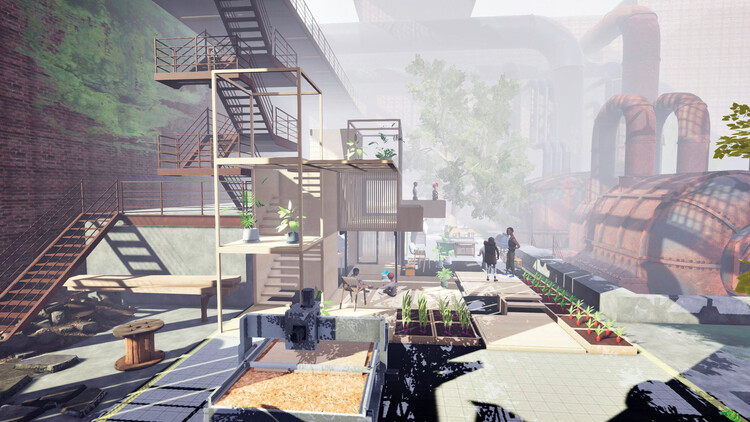
Major firms use virtual reality to cut about 80% of design revisions. Clients can walk through full-size spaces in VR before construction starts, so many problems get fixed early and costly mistakes are avoided.
The metaverse is not a replacement for traditional practice. It creates a parallel profession that needs skill in spatial storytelling, user experience and technical delivery.
1. Zaha Hadid Architects’ Liberland Metaverse
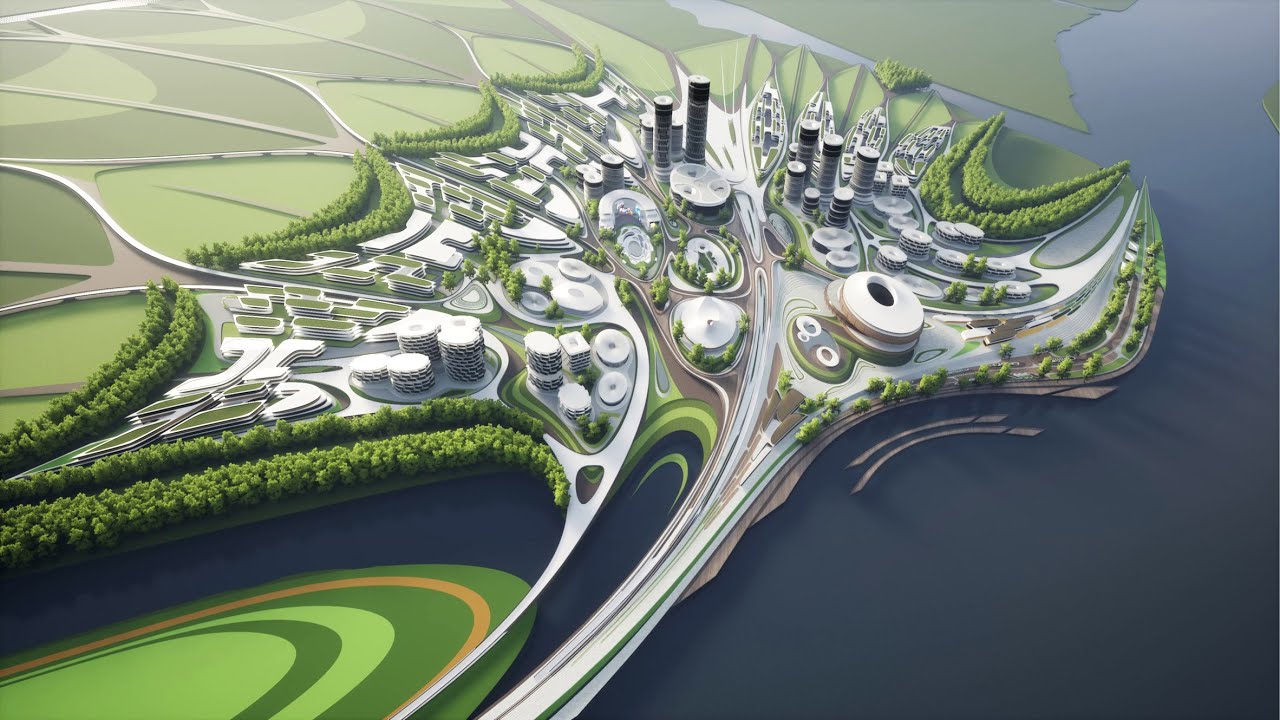
The Liberland Metaverse is a virtual city made by Mytaverse and Zaha Hadid Architects. It shows parks, plazas, public buildings and open systems for governance. The project ties ZHA’s flowing forms to the idea of a tiny, self-declared nation on disputed land between Croatia and Serbia.
Design And Experience
Unlike real cities that carry layers of rules and history, Liberland is not limited by weight, laws, or construction methods. Shiny façades curve into shared squares, and sweeping shapes open into amphitheaters. The layout tests how ideas like local control, clear decision-making and decentralization can be expressed through space in an online nation.
ZHA’s futuristic curves reach their fullest expression when they do not need to meet engineering limits. This cyber city shows how leading designers can move their signature style into a realm that physical materials cannot match.
Technical Point
When physics and material cost are removed, choices about walls and forms become choices about how people feel and move. With no need for load-bearing structures, each element focuses on user experience and emotional impact. That makes architectural skill important even without traditional constraints.
Broader Implications
Liberland raises a question about the future of nations. Could online communities work with only governance systems and meeting places, rather than full state infrastructure? In this project, buildings act more as symbols and gathering spots than as shelter, turning architecture into a political message as much as a utility.
2. Krista Kim’s Mars House
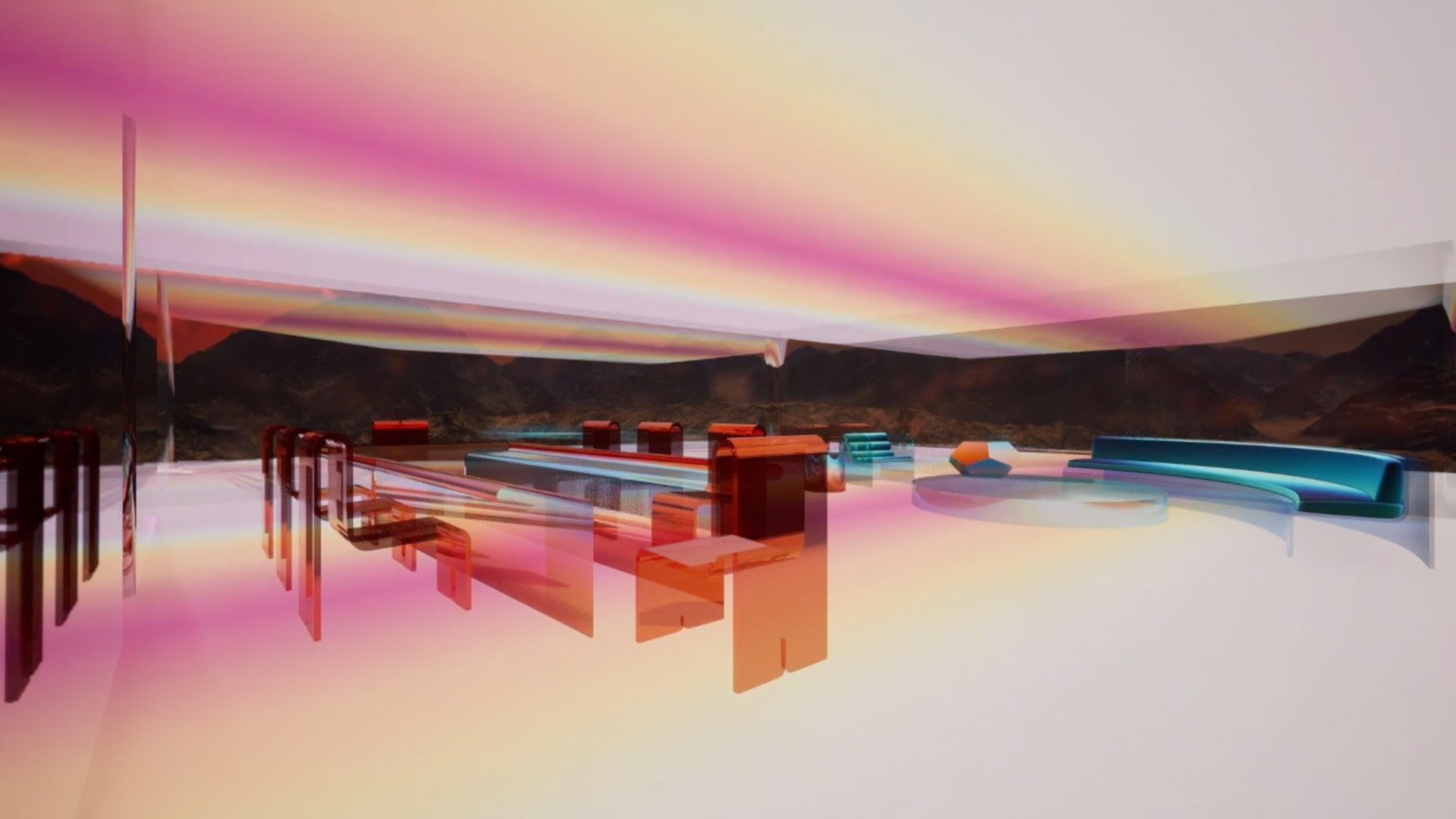
Toronto artist Krista Kim made a fully digital home called Mars House. She designed it in May 2020 and built it as a 3D file using Unreal Engine. It became the first digital home sold on an NFT marketplace when it went on SuperRare.
Mars House sold for 288 Ether, about $512,000. That price set a new benchmark for architectural works that exist only as digital files.
Design And Mood
Kim calls the work a light sculpture. She drew on Kyoto architecture and its calm, community-focused feel. Bright color gradients cover the floor and ceiling, giving the space a quiet, meditative mood. Musician Jeff Schroeder from The Smashing Pumpkins made a soundtrack to heighten that calming effect.
How It Earns Money
The metaverse created a market for architectural ideasthat never need to be built. Architects can sell vision and design as products. The buyer of Mars House got 3D files that work across several metaverse platforms and the right to order physical pieces of the home’s tempered printed glass furniture.
Legal Importance
In 2024 the Federal Court of Canada ruled Krista Kim is the sole author of the work and that the plaintiffs own the copyright to the project, including Mars House. That decision helped clarify who controls and owns digital architecture after a dispute with the 3D visualizer who rendered the project.
A New View Of Homes
Kim believes micro LED technology will be built into floors, walls, and ceilings. She argues that art and tech together can make living spaces healthier, treating homes as places for healing, not just shelter. Mars House points toward that new idea, made possible by digital platforms.
3. BIG’s Viceverse
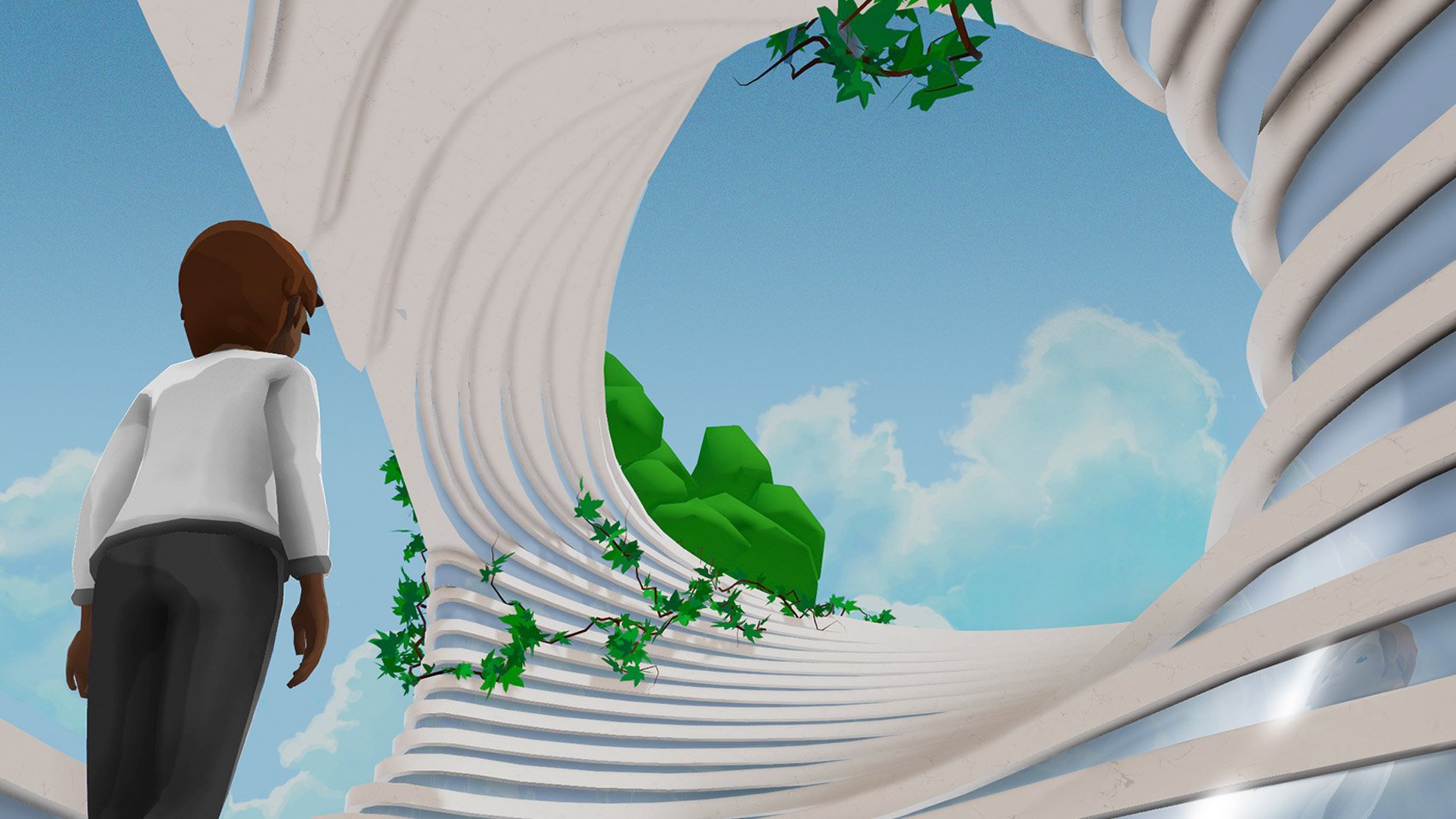
Danish firm BIG created Viceverse, a virtual headquarters for Vice Media Group. They treated the project like a real office, planning circulation, brand presence and team spaces just as they would for a physical building.
Even creating penthouse floor plansfor premium executive areas. The virtual site has meeting rooms, hangout spots and places for unplanned encounters, the casual interactions that remote teams often miss.
Flexible Spaces
Viceverse can grow or shrink based on how many people are using it. Rooms can change use during the day: a morning meeting area can turn into an afternoon lounge and an evening presentation space. This time-based change lets architects design for use over the whole day, not only for one moment.
User Experience And Game Design
BIG used ideas from video game level design to help people move through the space and stay engaged. The design guides attention and movement so the environment feels easy to use and interesting.
New Ways Of Working
Viceverse tests carefully made virtual spaces can recreate spontaneous collaboration that comes from being close in person. Early signs show these spaces build stronger connection than regular video calls, though they do not replace in-person meetings fully.
4. Gluon’s Nakagin Capsule Tower Revival
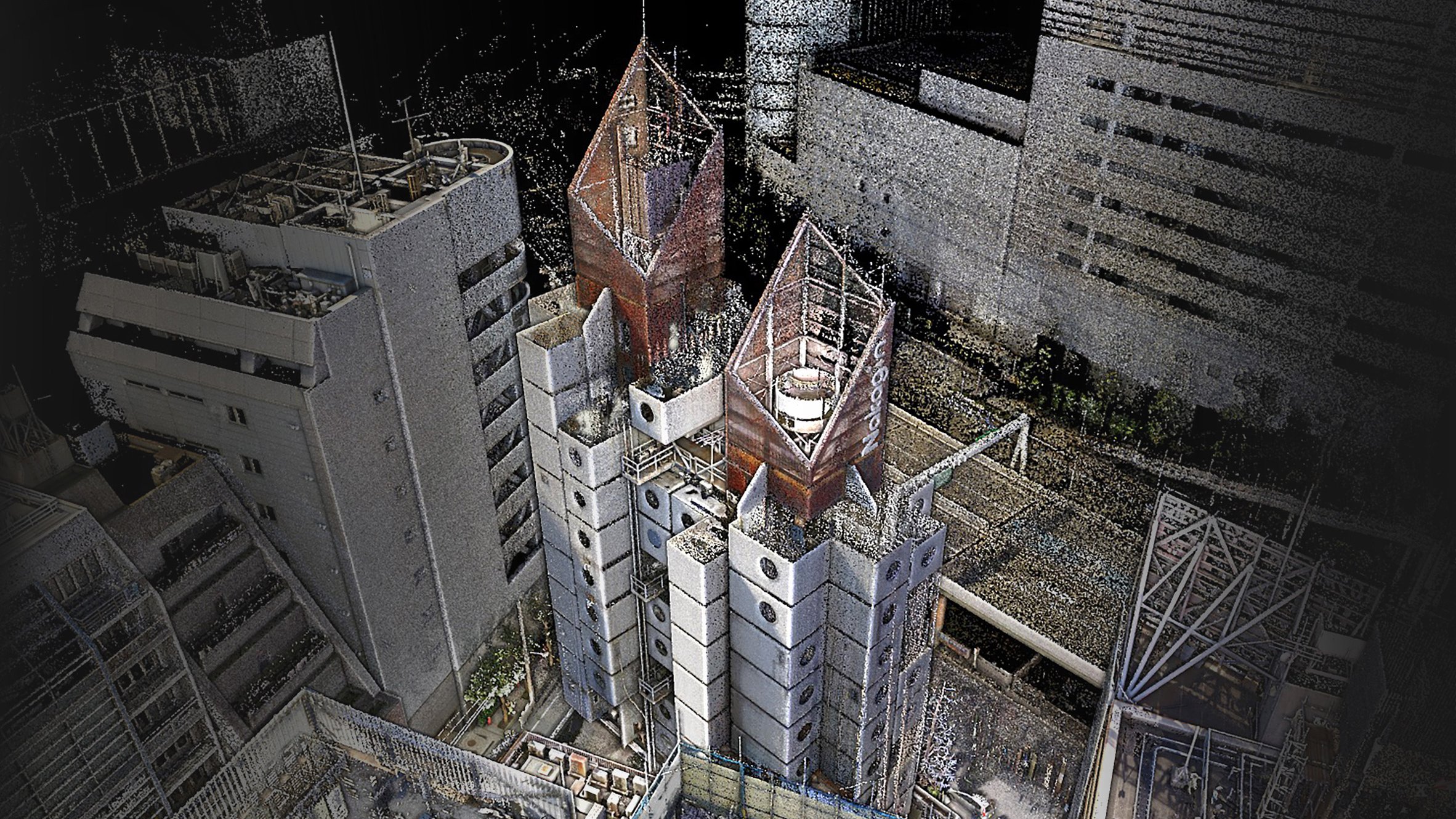
Tokyo’s Nakagin Capsule Tower, a milestone of Metabolist architecture, was torn down in 2022. Gluon, a design studio in Tokyo, rebuilt the tower inside a virtual world. They worked with the Nakagin Capsule Tower Preservation Projectto do this.
What Gluon Made
Gluon recreated the building based on its original ideas: flexible design, plug-in living, and the idea that buildings go through cycles. This is not a nostalgic copy. It is a new take that keeps the spirit of Kisho Kurokawa’s work.
How People Use It
In this virtual tower, people can rent or buy private units as NFTs. Owners can style the interiors with AI-generated designs, hold online meetings, or sit quietly and look out at a virtual Tokyo skyline.
Why It Matters For Preservation
Putting demolished buildings online gives them a second life. They keep their shape and cultural value in a space anyone can visit. This also forces a tough choice: when money is limited, should we try to rebuild the real building or create a virtual version?
A Living Monument
This virtual Nakagin is not a static display. People live in it, change their units, and host events. That keeps Kurokawa’s vision active and useful, not just a memory.
How It Pays For Itself
The project sells units as NFTs. Those tokens prove each unit is unique and let buyers own virtual property. Sales raise money for development and help keep the project going.
5. Voxel Architects' Metaverse Fashion Week Finale
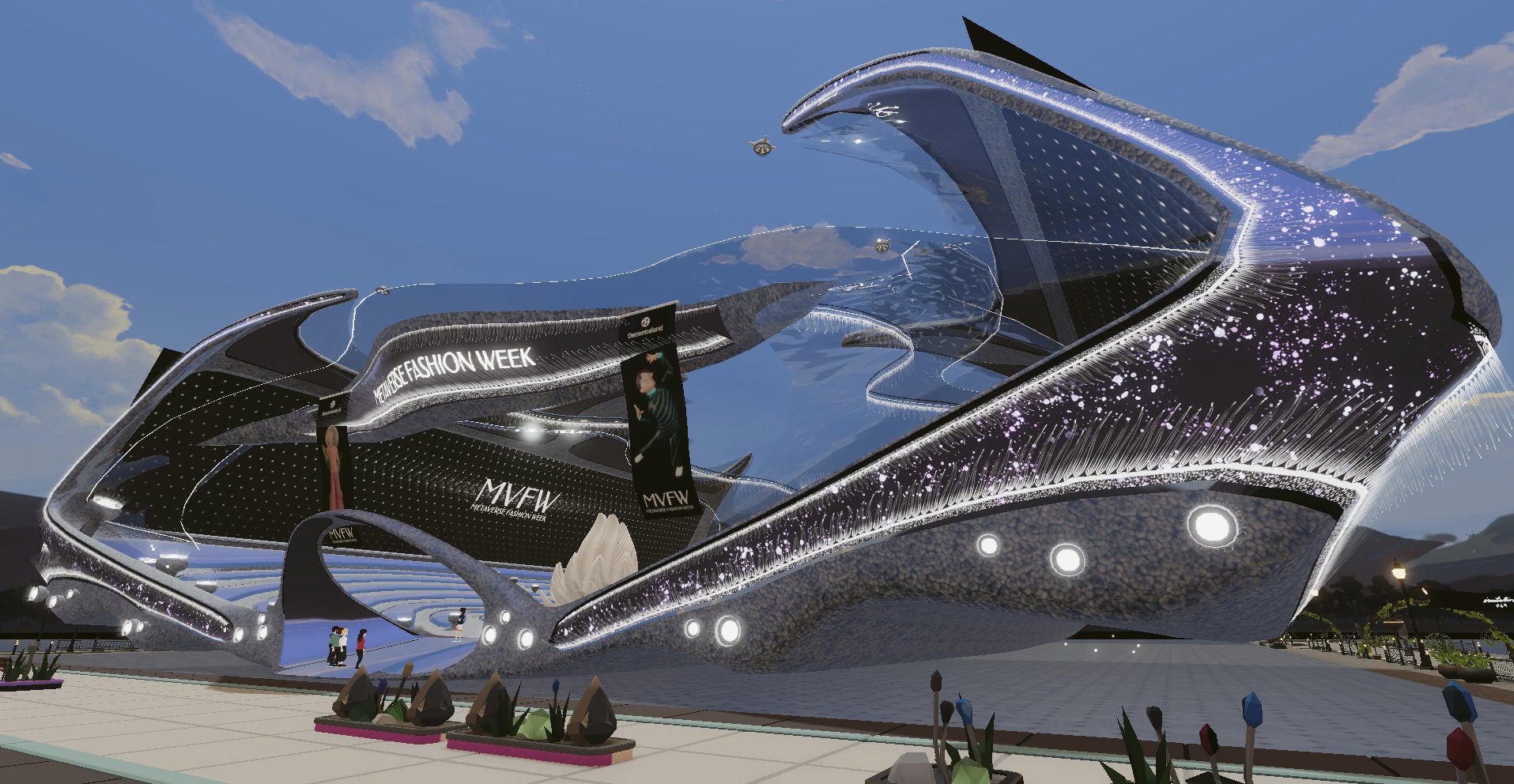
Voxel Architects is a team of artists who work with virtual reality, blockchain, and digital art. Their design group includes architects with experience in the car industry. They built a dreamlike virtual world to host the final show of Metaverse Fashion Week.
The Auroboros Collaboration
Digital fashion label Auroboros joined Voxel to create a rocket-shaped virtual building for the closing event. The design mixed bold architecture with a runway, showing that metaverse structures act as immersive stages, not just empty rooms.
Ephemeral Architecture
Metaverse venues appear for an event and then disappear. This short lifespan lets designers take risks they could not take with permanent buildings. Each season brings a new statement that matches fashion’s constant change.
A Mix Of Skills
Voxel combines VR, car design, and digital art. Car designers bring knowledge of airflow and surface shape. VR creators know how to make a user feel present. Putting these skills together produces work you won’t see from people trained only in classic architecture.
Real Commercial Value
Luxury brands, including Giuseppe Zanotti, used Voxel’s spaces to launch digital items. The sets did more than look good, they helped tell each brand’s story and supported real sales in the digital market.
6. Search History At MAXXI
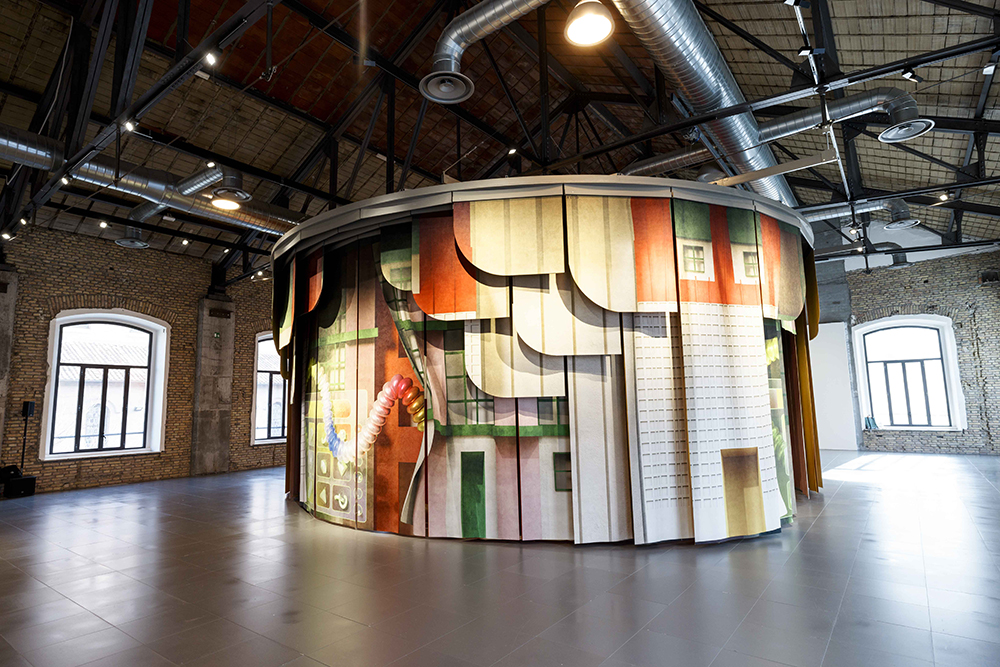
Space Popular has opened Search History at the MAXXI museum in Rome. The studio uses ideas from Italian architect Aldo Rossi to shape digital places, showing that classic architectural thinking still matters when physical limits disappear.
Rossi’s Ideas In Online Space
Space Popular asks what happens when Rossi’s views on collective memory, typology, and the city as an artifact move into digital worlds. Can online environments carry cultural memory? Do familiar building types form in the metaverse the same way they do in real cities?
Design That Helps People
Neil Leach, author of The Future of Virtual Architecture, points out that successful digital places solve psychological needs more than physical ones. The most interesting metaverse buildings guide attention, set a mood, and make social interaction easier in ways real-world buildings cannot.
Academic Importance
The project brings formal architectural debate into metaverse work, lifting it above game design or tech demos. Space Popular shows that digital design deserves serious study and can be part of professional architectural practice, not just a trend.
Teaching And Practice
Architecture schools are starting to teach metaverse design. Space Popular’s framework lets teachers add digital practice to courses while keeping core architectural knowledge. The field grows alongside traditional practice rather than replacing it.
7. PLP Architecture's NFT Skyscraper

UK firm PLP Architecture sold 5,000 NFTs tied to a virtual skyscraper in the metaverse. The sale funded ongoing work on the project and introduced a new way to pay for digital buildings.
Crowdfunding Through Digital Ownership
PLP split the skyscraper idea into 5,000 distinct digital assets. Each token represents a stake in the finished virtual building. Early buyers got the best virtual locations and their purchases provided the money needed to keep building. This flips the old model where outside investors or banks supply funds and wait for returns.
A Different Financing Model
These architectural tokens act as both collectibles and investments. They sit alongside top celebrity nft collectionsin the wider market, but here each token gives a direct stake in the project.
Buyers own a one-of-a-kind digital piece right away and hope its value rises as the metaverse grows. For the project team this meant access to funding without traditional lenders or investors taking control.
Design And Uniqueness
Every token shows different architectural details while fitting the overall design. PLP used computational design tools to create many variations that would be too costly to build in the real world. That way each token-holder truly owns a distinct piece of the design.
Real-time Market Testing
Selling tokens also tested public interest before full development. Strong sales confirmed the design direction, while weak sales signaled areas to change. This step-by-step feedback lowers the risk compared with projects where problems only appear after construction finishes.
8. Grimshaw And Farshid Moussavi’s Silk Road Hubs
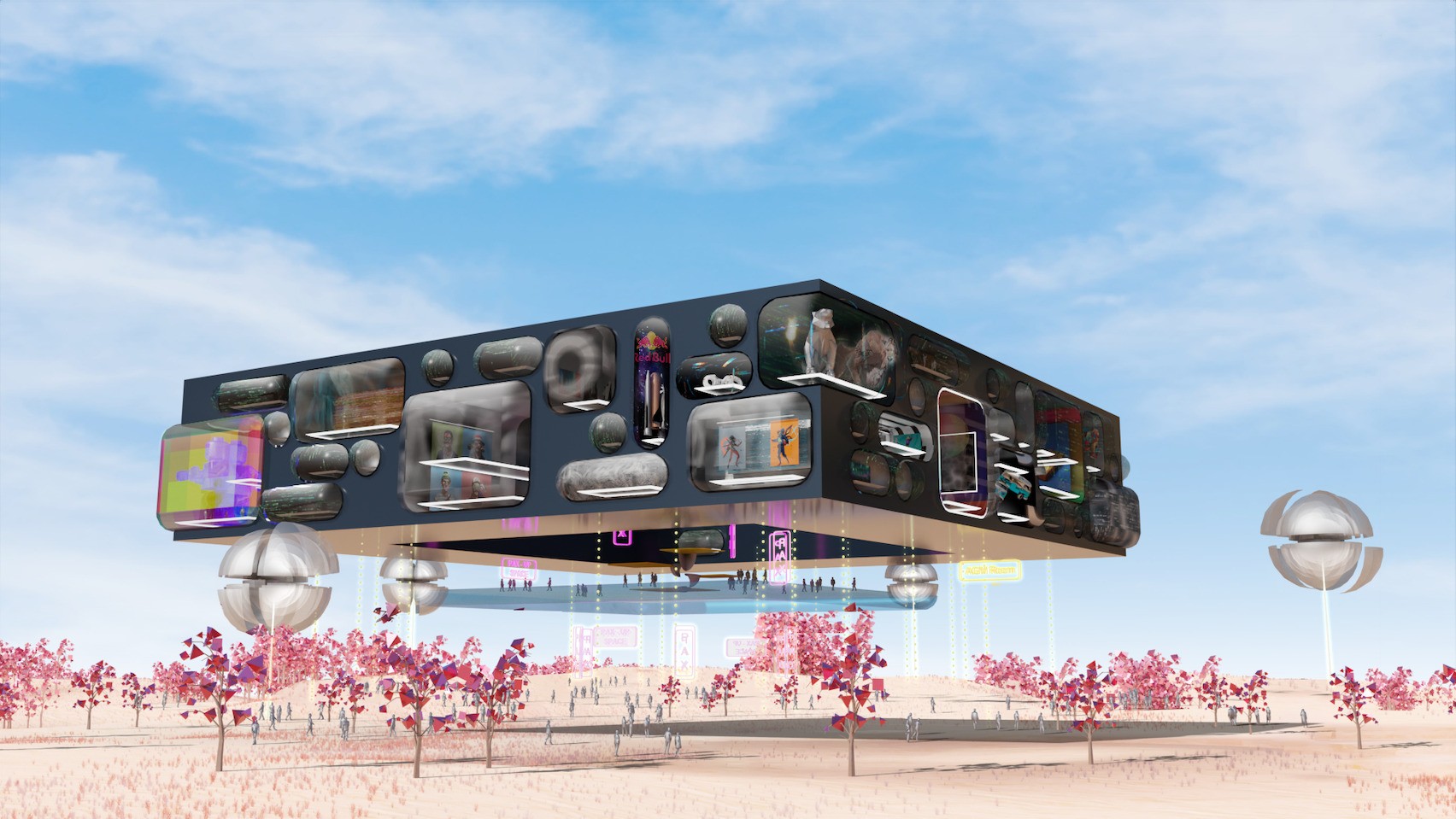
Grimshaw, HWKN, WHY and Farshid Moussavi teamed up with metaverse company Pax.world to build virtual hubs inspired by the ancient Silk Road. These spaces borrow from the route’s architectural traditions while meeting the needs of people who want to meet and share online.
Why The Silk Road Matters Here
The Silk Road once linked many different societies through trade and travel. The new hubs borrow that mixing of styles to create online meeting places that feel familiar to many cultures at once.
Cultural Sensitivity
Design shows who people are and what they value. Before sketching ideas, the teams study local languages, memories tied to places, and daily life. Even though these hubs are online and do not sit in one country, users will come from many backgrounds. The goal is to create virtual places that include many traditions and feel respectful to all.
Working Together
Several well-known firms added their own design ideas while following shared themes. This teamwork mirrors how real Silk Road cities grew, picking up influences from traders and travelers. The outcome feels natural and mixed, not forced.
Building Community
The hubs act as meeting points for people around the world who share cultural interests. Thoughtful design gives these places a sense of belonging, helping users form real connections. That social role matches how public buildings and squares work in cities.
9. Team Intelligence's NFT Real Estate Development

Team Intelligence is an early leader in metaverse design and NFT real estate. They build virtual properties and offer end-to-end services that take a concept through design, NFT creation, and go-to-market work. Their goal is to shape how architecture looks and works in the digital world.
What They Do
They manage every stage of virtual-building projects. That includes market research, design options, facade and material choices, detailed parametric 3D models, and linking designs to virtual reality apps. They also create the NFT for a project and run the marketing needed to launch it.
Business Model
The firm is made up of architectural visualization specialists spread across several countries. With offices and visualizers around the world, their team reflects the borderless nature of virtual work while tapping global talent.
Client Experience
After a model is finished, Team Intelligence puts it into a VR app so clients can walk through their project in full scale. This gives a clearer view of the design than traditional drawings or scale models.
Market Position
Team Intelligence shows that focused metaverse architecture firms can be viable. As the field grows, it will likely split into specialist practices, the same way architecture once separated from general contracting.
10. Mission Critical Studios
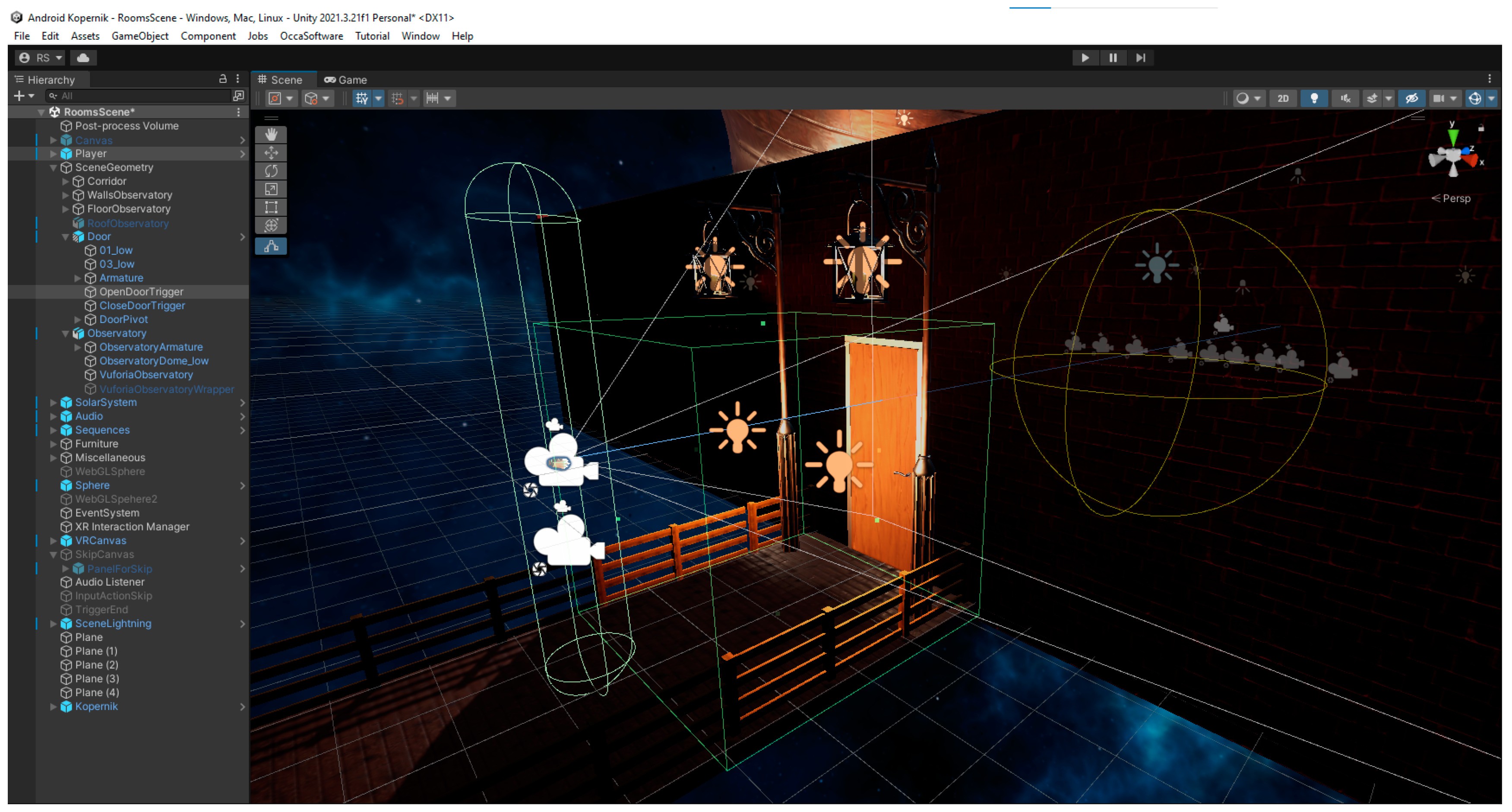
Mission Critical Studios builds mobile games, VR and AR experiences, and learning games. Their work shows how virtual world design can do more than entertain, it can teach.
Virtual Spaces As Classrooms
Virtual learning spaces need to keep students engaged while meeting clear goals. Good spatial design leads learners through lessons, helps them remember key ideas and reduces distractions common in digital settings.
Design That Teaches
A virtual classroom is not just a 3D copy of a real room. The best designs let learners visit ancient Rome, zoom into molecules, or turn math ideas into walkable shapes. In these settings, the space itself becomes part of the lesson.
Accessibility And Inclusion
Online learning spaces can change instantly to fit different needs and cultures. They can support many learning styles and make education easier to reach for more people.
Future Chances
As schools add more hands-on digital lessons, demand will rise for designers who know both spatial design and teaching methods. That combination will open many job and growth opportunities.
Mission Critical Studios shows how well-made virtual spaces can boost teaching, widen access, and create new roles at the meeting point of design and education.
Essential Tools Powering Metaverse Architecture
Unity Engine - Democratizing Virtual Worlds
Unity is strong at 2D and 3D work and supports VR and AR. It gives ready-made tools that help beginners learn faster. The engine runs on many platforms: web, mobile, and desktop. Its interface is easy to use and it uses C#, which many find simpler than C++.
The Asset Store holds over 60,000 items, so teams can prototype and build quickly. For example, a small team used store assets to make the VR game Zenith: The Last City. Why many choose this engine: it lets you deploy across devices, has wide documentation and community support, and offers free plans for early prototyping as of 2025.
Unreal Engine 5 - Photoreal Visualization
Unreal Engine 5 focuses on top-level visuals with tools like Nanite and Lumen, plus the Quixel asset library and MetaHuman for lifelike characters. Nanite handles extremely detailed geometry while Lumen gives real-time lighting that reacts to changes.
The engine supports powerful visual scripting so non-programmers can add interactivity. These strengths make it ideal for projects that need film-like quality. Limitations: Nanite and Lumen were not ready for VR at launch, and there is no firm release date for full VR support.
Emerging Open-Source Options
Ethereal Engine (XREngine) is a free full-stack MMO framework for events, games, and virtual shows. Webaverse runs in the browser and supports building and hosting worlds with a focus on interoperability and user control.
Key Skills For Metaverse Designers
Computational Design
Procedural generation creates large, varied spaces without manual modeling. Designers should know parametric tools like Grasshopper and Houdini to make complex shapes by algorithm. This approach enables mass customization and faster content creation.
Cross-Disciplinary Work
Designing for virtual worlds blends architecture, engineering, game design, real estate, and computer science. Practical skills include 3D modeling (Blender, Maya, 3ds Max), game engine use (Unity, Unreal), basic coding (C#, C++, Python, JavaScript), user experience, and an understanding of VR and blockchain platforms.
Psychological Awareness
Virtual spaces shape how people feel and behave. Good designers borrow methods from game design to measure user interactions and base choices on real data. This makes spaces that work better for users, not just look impressive.
Business Models And Opportunities
Digital Asset Creation And Sales
Designers can sell unique items as NFTs or offer reusable digital products like buildings, furniture, textures, and point clouds. These items can serve games, films, and virtual worlds and command premium prices when done well.
Virtual Real Estate Development
Platforms such as Decentraland, The Sandbox, and Horizon Worlds host markets for virtual land. Architects earn fees for designing spaces much like in physical development but without on-site constraints.
Simple projects built in Unity often start around $30,000 to $50,000. Higher-fidelity Unreal projects commonly start near $40,000 to $60,000 depending on complexity.
Hybrid Physical-Digital Practice
Firms using VR for client walkthroughs report faster decisions and fewer requested changes. Digital twins and scanned point clouds link real buildings to virtual models, supporting simulation, monitoring, and predictive maintenance.
Major Challenges
VR Hardware Limits
Headsets remain costly, can be uncomfortable for long sessions, and often lack the resolution needed for top visuals. Until hardware improves, most users will be early adopters rather than the general public, which limits how widely metaverse design can be sold.
Interoperability Issues
Many platforms act like separate islands. Content built for one system rarely works in another without rebuilding. Open-source projects aim to change this, but broad adoption will take time.
Economic Uncertainty
The initial NFT boom faded after 2021. Big sales grabbed headlines then, but current market conditions make it unclear if the same demand will return and support long-term professional practices.
Cultural And Social Risks
Virtual worlds can copy or worsen real-world inequalities. Designers should listen to communities and center social impact when making decisions to avoid excluding voices and perspectives.
Future Paths
AI-Assisted Design
AI now helps produce variations, optimize layouts, and generate textures. This will free designers from repetitive tasks so they can focus on user experience and creative direction.
Augmented Reality Blends
AR will layer digital architecture onto the real world, letting people see additional information or virtual structures through phones or glasses. This could change how cities are designed and experienced.
Decentralized Governance
DAOs may let communities own and manage virtual property together, where residents vote on changes and plan shared spaces.
The Metaverse As A Test Lab
Virtual environments let designers test ideas quickly and collect real user data. That feedback can then shape physical architecture. The digital realm will act as a fast, low-cost research space that informs future built work.
FAQs About Architecture In The Metaverse
What Is Metaverse Architecture?
Metaverse architecture is the design and building of virtual places people can visit online.
How Much Do Metaverse Architecture Projects Cost?
Simple projects built in Unity can start around $30,000 to $50,000. More detailed work in Unreal Engine often runs $40,000 to $60,000 or more.
Can Metaverse Buildings Make Real Money?
Architects can sell one-off designs as NFTs, create reusable assets like furniture or textures, build virtual land to rent or sell, and offer consulting to brands.
What Software Do Metaverse Architects Use?
BIM and parametric design software, plus game engines like Unity and Unreal Engine 5. 3D tools such as Blender and Maya are used for modeling, and Grasshopper or Houdini for generative geometry.
How Does Metaverse Architecture Affect Sustainability?
Digital design removes material waste and transport emissions tied to physical builds. Testing ideas in virtual space cuts costly mistakes and saves resources.
How Will AI Affect Metaverse Architecture?
AI speeds up idea generation, suggests layout options and creates realistic surfaces. It can help users personalize spaces.
Final Thoughts
The metaverse is not replacing traditional architecture. It works as a prototyping space where teams spot and fix problems before they turn into costly construction mistakes.
Once seen as science fiction, it has grown into a real part of building work and now needs serious attention from established firms and new specialists.
Also Check Out: Top Cryptocurrency Wallets